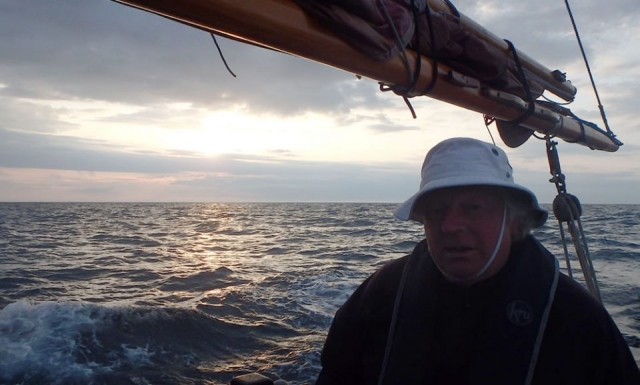
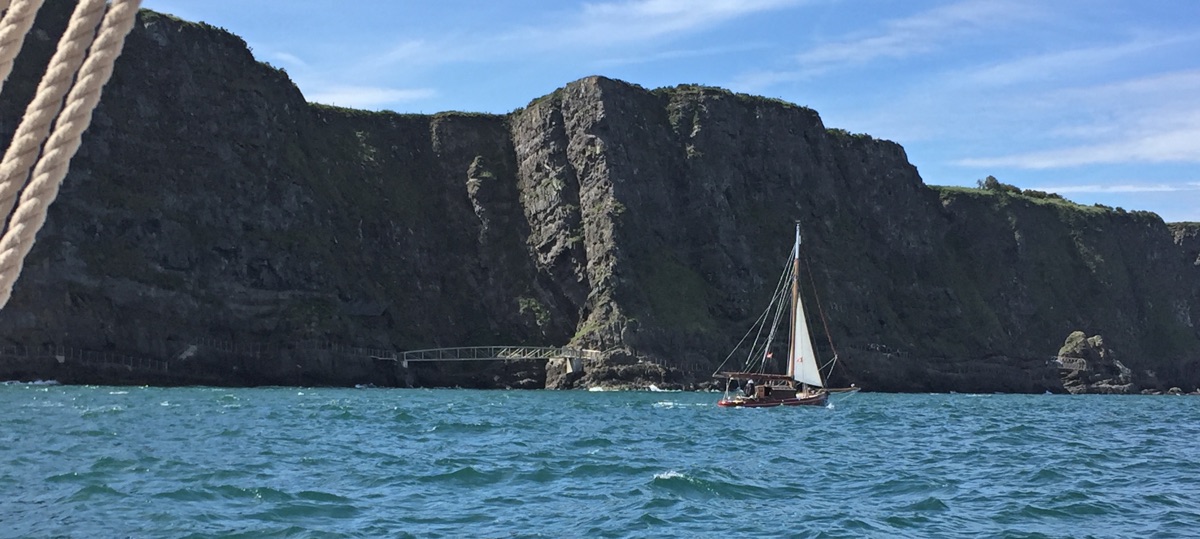
The aim was to take part in the JESTER challenge which was a single-handed trip down to Baltimore in southern Ireland (approx 250 miles).
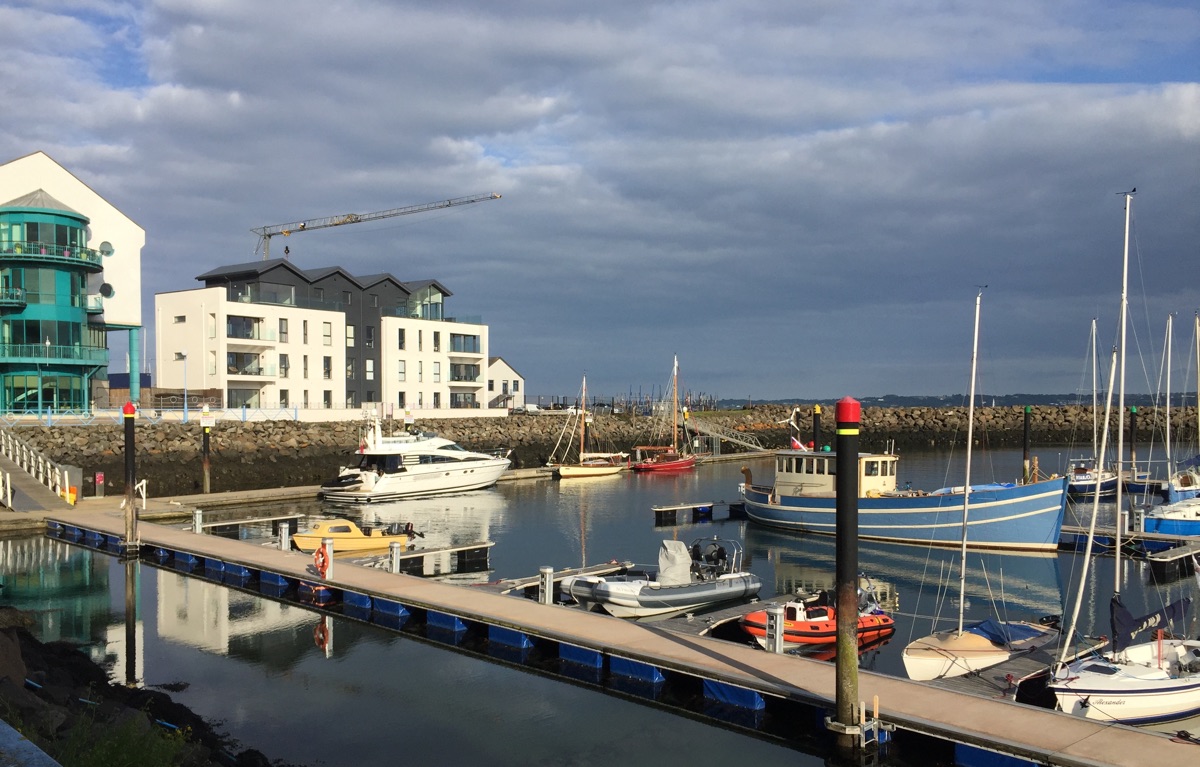
The start was from Pwllheli on 18 June.I left Conwy on Thursday 15th, carried the tide out of the river then across the banks and down the Menai Strait.I picked up a mooring at Menai Bridge to wait for the tide through the Swellies.When the tide turned in my favour I left intending to get as far as possible on that tide.I managed to get over the Caernarfon Bar and anchored on the west side of Anglesey at 21.00.I left the anchorage in the morning with the south-going tide.The wind was light from the SW for a time then dropped off so I had to motor down to Bardsey Sound.The tide was slacking off as I went through, and the wind picked up slightly so I could sail down to Pwllheli.I called the marina and they told me where to moor with the other JESTER boats.
On Saturday I topped up with water and food and checked the boat over.On Saturday evening there was a dinner in the sailing club for the skippers.
Sunday 18th a 12.00 start from outside the marina, after breakfast in the sailing club and getting the latest forecast.Light winds from the SW until Thursday then 30 knots SW!
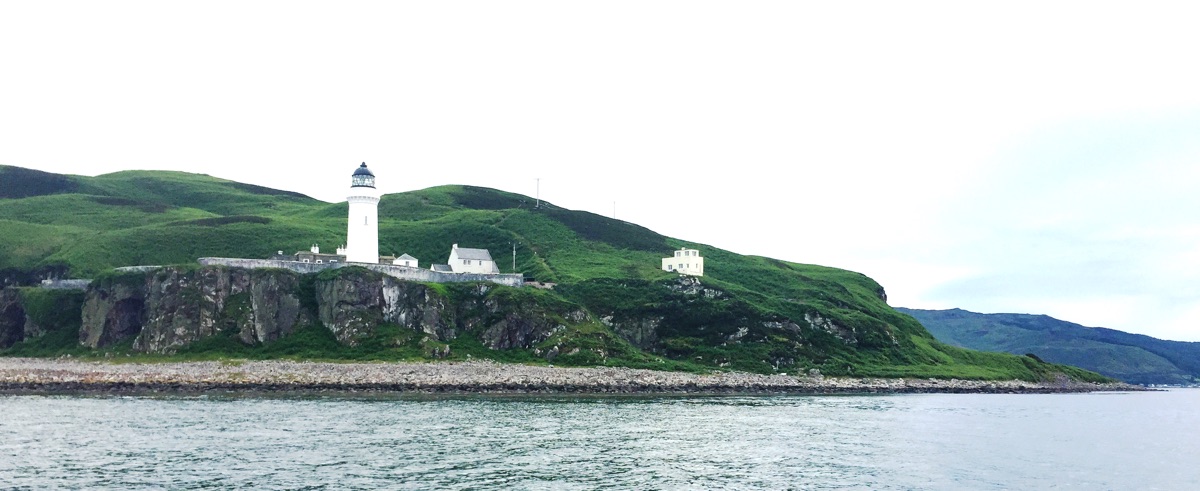
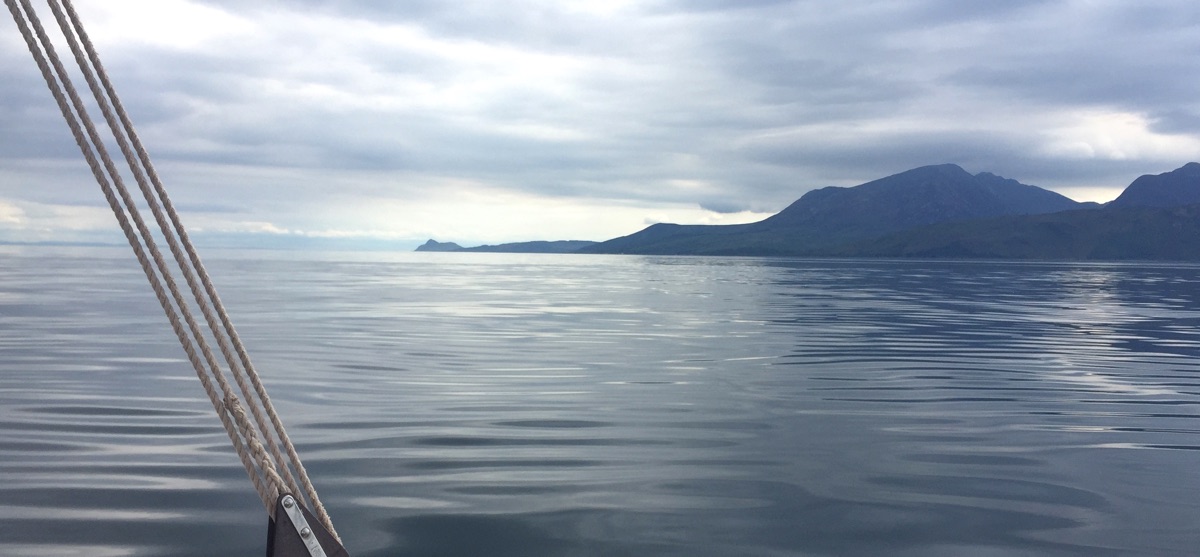
I motored out to the start, the engine stopped 3 times!I got to the start line and 9 boats set off slowly, most going SE before tacking back and forth to get past Bardsey Island to starboard, and the reef which runs halfway across Caernarfon Bay.It took 14 hours to pass Bardsey Island and get out into the open sea.The wind picked up slightly and I had an enjoyable sail overnight, with not too many ships to avoid.I sighted Tuscan Rock lighthouse in the south-east of Ireland on Monday evening.I managed to clear it before it got dark and the tide changed.
The next mark to get past was the big buoy marking the end of the Saltee Islands and the rocks that stick out 8 miles offshore.The winds were still light so making slow progress, having to tack along the coast avoiding the TSS offshore.I didn’t get much sleep overnight.
When it got light in the morning I could see that the headsail appeared to be split and either side of the shrouds.As I was coming up to Hook Head I decided to go down the river and look for an anchorage or mooring to sort out the sail and engine.I started the engine and motored up to near Dunmore East and picked up a mooring.The engine stopped but re-started.I had something to eat and fell asleep for 4 hours.
Refreshed, I had a look at the sail.Not as bad as it looked.About 12 ft (4 mt) of the UV strip had come loose and that’s what was around the rigging.I spent 3 hours sewing it back on as best I could.Then I looked at the engine.This was the linkage to the throttle that had come loose.After some fiddling around I managed to sort it out.
It was 16.00 on Tuesday evening so I motored out to where I had started the engine and set sail.The wind was still light, gone more westerly, so was on the nose for Baltimore.Had some long, slow tacks overnight.The wind was very light then dropped away and I was just wallowing around.I considered my options as to the weather, as there was a strong wind warning for Thursday.
The Fastnet Rock was the next mark to round, 90 miles to windward.I decided to go to Crosshaven (Cork Harbour).I tied up in the marina at 15.00 Wednesday afternoon, had a pint of Guinness and some food in the sailing clubhouse, and then got an up-to-date weather forecast.
F7 Thursday evening from SW!After another pint of Guinness, I decided to head back down the coast on the Thursday morning tide.
I left at 09.00 with the tide, to see how far I could get before the weather deteriorated.The wind started light but slowly picked up during the day but was behind me, so I made good time.
I arrived back at Dunmore East at 21.00 and tied up on the visitors’ pontoon, rafted alongside a boat from Dublin who had heard the forecast.
By midnight the winds were 30 knots and had been uprated to an F8 gale.I spent 3 nights in Dunmore East waiting for a better forecast.No fishing boats went out and a cruise ship visit was cancelled because of the weather.I spent Friday looking around the town, pubs and chip shop.Saturday I spent some more time sewing the headsail and preparing to leave on Sunday morning.Still a strong wind warning out for Sunday but it would be behind me.
I left at 07.00 on Sunday morning with a good breeze behind me (20 knots).I was goose-winged for the next 24 hours, heading back to Wales.
I dropped anchor in Porthdinllaen at 07.30 on Monday morning, and had something to eat and a rest, waiting for the tide over the Caernarfon Bar.I left the anchorage at 11.30 and carried the tide down to the Bar.It was still blowing 20 knots so it was interesting!Over the Bar then down to Caernarfon for the night, arrived at 15.30.
Tuesday morning I left as soon as they opened the sill to get out.I carried the tide as far as possible, then over the banks to get back into Conwy, a little after HW.I spent the rest of Tuesday sorting out the boat and stayed on board before travelling home on Wednesday, returning the following week for the LaLa Rally.
I will have another go at getting to Baltimore in 2025
Return of Tern Following a fairly major renovation carried out in 2016 which is when the current owners John & Gail Hodson obtained her, ‘Tern’ is almost ready for her re-launch in 2024. Purchased from the estate of her previous owner, Mike Griffiths, was renamed by him to ‘Arthur Alexander’, his father’s name.
‘Tern’ is the original name given to this 34ft Morecambe Bay Prawner-'Nobby', when she was launched in 1894, having been built during 1893, by Gibsons of Fleetwood to a specification by their then-in-house designer William Stoba and was first registered in Preston.
‘Tern’ has had an incredible history including a spell as a requisitioned Fire Watch vessel on the River Mersey during WW2 and surviving being sunk in the sands of Skippool Creek on the River Wyre where she was located and raised by ‘Stan the Man’ Hurley and subsequently renovated by Mike Griffiths in the 1980s. As the ‘Arthur Alexander’ she went on to take part and win the famous ‘Nobby Race in 1988’ which took part on the River Mersey. Organised by the Nobby Owners Association and up until recently is an event that the NOA Classic Boat Association hopes to revive in the not-too-distant future.
The planned 2024 re-launch will be especially fitting as it would be ‘Tern’s’ 130th Anniversary and marks yet another chapter in this remarkable vessel’s already colourful history. This will be followed by a series of videos published through the NOA Classic Boat Association showing the various stages of her latest re-fit and will hopefully encourage more like-minded people to commit to the preservation and active sailing of these truly beautiful craft. The launch will take place on the lower tidal section of the River Douglas at ‘The Old Boatyard’ which was established in 1726 – dates and times to be announced. Watch this space!
The thirty-fifth AGM of the Nobby Owners Association is to take place starting at 2 pm Saturday 26 February at the West Cheshire Sailing Club, Coastal Drive, Wallasey CH45 3PZ.
Members and their family and friends are duly invited.
As this is the first opportunity to get together for our AGM, since the Covid19 restrictions, the afternoon will commence with a FREE BUFFET + £1 Raffle (100% of the takings to the winner). The buffet will be served at 1 pm, (the bar opens at 12:30 pm), any family and friends (non-members) are welcome too, at the cost price of £8.50 / ticket. The buffet is a ticket-only affair, including for members. The last date for any tickets to be issued is 20 February, no buffet tickets will be available after this deadline. If you do not wish to partake in the free buffet and raffle, note that the AGM will be starting at 2 pm.
MEMBERS BOOK HERE - Click Image Above!
Your booking will be confirmed, sent out separately by email. Please allow 24 hrs and then print out the email received and bring it to the AGM. Please check your SPAM folder for confirmation if not received after 24 hrs!
After booking your Buffet for the AGM please return to this page if you need to book further tickets for any family and friends use the link from the image below.
YOUR GUESTS - Click Image Above!
If you intend to be joined by family or friends please use the link from the image on the right after you have registered yourself above.
Well, it's certainly true to say that COVID-19 has decimated the social & sailing programme for 2020. Both on terra firma and at sea. The only serious sailing that has taken place has been by our President who needed to return his boat 'Phyllis' to her homeport of Deganwy from Largs in Scotland. The plan was to travel as a fleet to Largs, taking in the splendid scenery and bonhomie company, some sailing around the Clyde before venturing back south to our homeports. As time wore on only 'Spray' was potentially up for the sail, but alas due to COVID-19 issues was delayed in Liverpool and could not make the timescale, 21 July - 31 July.
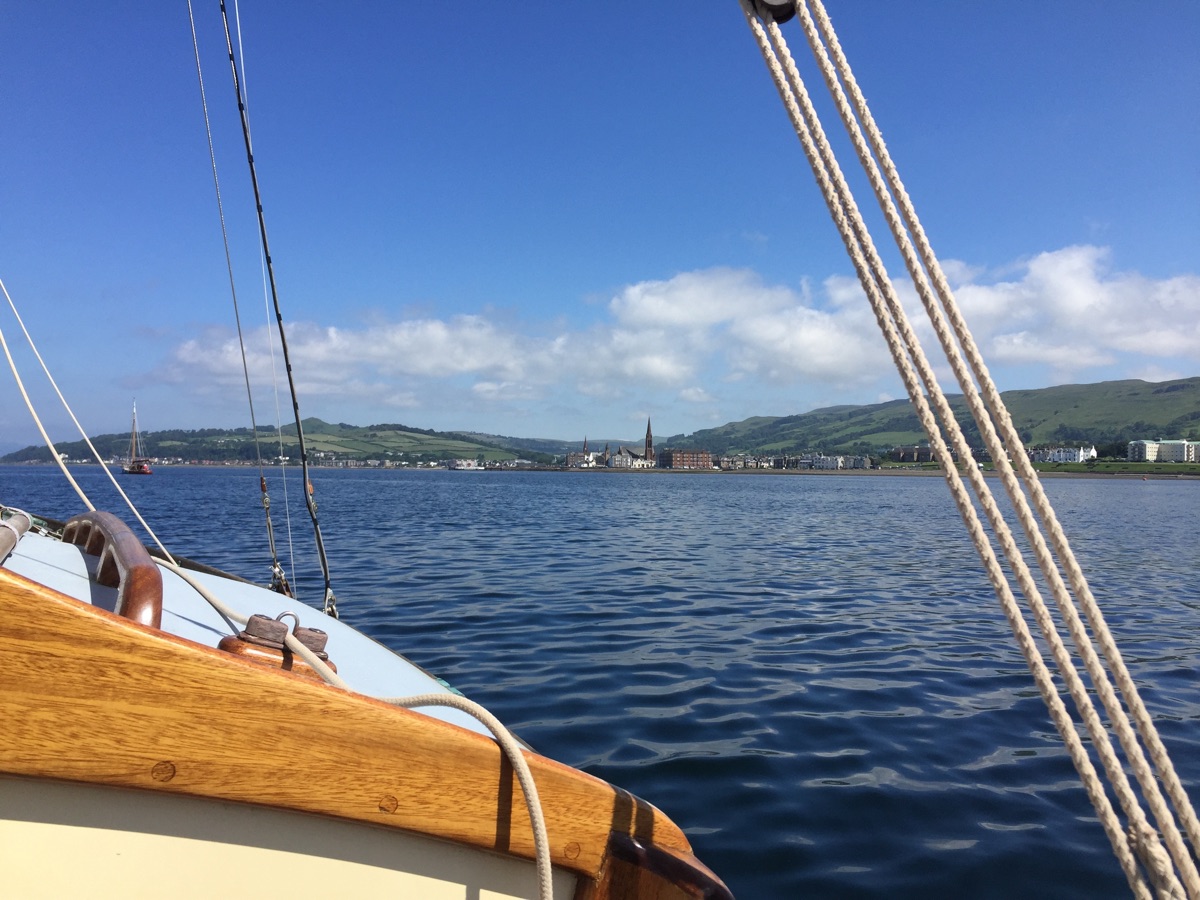
Largs looking across the Clyde.
Members Kevin Goulding and John Hodson then departed by car to Largs Marina in Scotland to board 'Phyllis'. After spending the winter months in Largs all was thought to be set for a return sail. Alas, when onboard and after only ten days since the previous visit to ensure everything was set to go the batteries would not start the engine. In the pouring rain, it took us a day to sort out the issue. The automatic battery charger had burnt out finally resulting in the acquisition of new batteries and a replacement charger. Ouch! Marina prices for the replacements.
However, now sorted we left Largs in dryer weather the following day. The weather should have been good at this time of year but for the majority of the time, it was terrible. Good company but poor weather. It was decided to follow as best we could some of the ports in the NOA Sail Programme. Leaving Largs we sailed up through the famous and beautiful Kyles of Bute. Then headed north into Loch Fyne giving us a choice of two good Marina's. One to starboard Portavadie with the other to port, East Loch Tarbet. We chose the latter if only because that was the one in the programme.
To East Loch Tarbet [30 nm]
East Loch Tarbet Marina.
A quick thirst quencher in the Harbour House before going for dinner in the refurbished Anchor Hotel. I dined on fresh Loch Fyne langoustine as a starter with scallops served as a main, scrumptious. John settled for a lovely steak. The evening was wrapped up by us finishing our wee bottles with a resident sailor in the marina, who was impressed with 'Phyllis'. Indeed he turned out to be Scott MacDonald (www.scott-macdonald.co.uk) a local artist and musician who resides on his 1955 Hillyard sailing boat.
The Jetty at Lochranza.
Leaving Tarbet with a fuzzy head at 8 am the following morning we started our voyage home, back to Deganwy. En-route we stopped off at picturesque Lochranza, at the north of the Isle of Arran, which is the location of the island’s first legal distillery for over 150 years.
Until the 19th century, Arran was renowned for its Malt Whisky, often made illicitly, and known locally as "Arran Water". A must visit. Alas on arrival at the distillery it was found to be closed.
Returning to the boat we departed for Lamlash Harbour, passing Goat Fell to starboard, then across Brodick Bay with Holy Island on the bow. As we had made such good progress we decided to continue to Girvan to berth overnight and partake at a favourite Indian restaurant.
To Girvan [45 nm] By this time the wind had picked up quite strongly and we found ourselves getting absolutely drenched while the recent road works furniture was being blown all over by the wind. Now, most will not recall but the crew did recall it very well! It was virtually one year to the day when 'Phyllis' was left in Girvan with a broken gearbox. Resulting in a year's stay in Scotland for 'Phyllis' due to a delay in the finding of parts, then the onset of the winter months (where she was berthed in Largs) and finally her subsequent return to Deganwy delayed by the COVID-19 pandemic. Well as if to remind us 'Phyllis' refused to go into reverse gear. Oh no! However, a quick inspection revealed nothing more than a sticking cable which was soon remedied. Phew!
The following morning, Sunday 25th, John prepared breakfast on the pontoon while I refuelled using the nearest garage, quite a walk carrying fuel back, as Girvan has no on berth fuelling facilities. Departing on what was a much better day to Portpatrick a couple of hours after low water (neaps) and we headed towards Alisa Craig to clear the 'bar' before turning to port. Good weather accompanied us across the entrance to Loch Ryan before bearing to port into the North Channel. The obligatory Northern Ireland ferries passed us going in both directions.
To Portpatrick [30 nm] Portpatrick can be a difficult entrance in poor weather as the tidal streams race across the entrance, in either direction north/south, but today all was good and we entered the little port lining up the transit markers quite easily. We shared the berthing with three other yachts, 17:30hrs.
Portpatrick and the weather turned very wet & windy.
That Sunday evening, it was buzzing with people, like Blackpool on a warm summers day, although lightly drizzling. The sky then took on a strange light and shortly after loomed clouds which rained down on us by the bucketful. Fortunately, we managed a beer or two and ate at the Crown Hotel outside under a parasol.
In speaking with Paul, an acquaintance we met coming up from Holyhead he told us that the IOM would allow anchoring or mooring to a buoy but no landing on the island. He had dropped an anchor in Derby Haven on his way north. And we heard of mixed receptions in the Republic of Ireland for visiting boats. Therefore this left little option but to chose the eastern Irish Sea seaboard route via Whitehaven and Fleetwood although with a strong westerly in all forecasts resulted in us on a lee shore.
To Whitehaven [60 nm] As time was pressing for both crew to be back home before the end of July, and a marginal forecast we set off, 08:30 hrs, for Whitehaven. Looking at the chart the overfalls at the Mull of Galloway looked challenging and indeed they were. This next leg had us in rough seas, rain and at times very poor visibility. The waves were big, at times up to 8ft high and on occasion perhaps more, but the following sea made for some exciting sail surfing. Saint Bees headland finally appeared and at 18:30 hrs we finally tied up in Whitehaven Marina. A quick refresh in the facilities and we just managed to get an evening meal, COVID-19 friendly, in The Vagabond.
The following two days proved taxing, as the wind and the rain picked up to 46 mph westerlies. We were to spend three nights at Whitehaven. A very successful seaport in the past but now a town which looked wretched in the pouring rain with shops closed or opening late mornings everywhere due to the pandemic. We endeavoured to make the best of it in the wind and rain even though all the museums and other facilities remained closed.
His crew spiked the guns.
A walk in the footsteps of John Paul Jones, a Scotsman born in Kirkcudbrightshire, who led the only American incursion to England in 1778 during the insurgency in North America. He sailed from France to pillage boats and ports in the Irish Sea during this period. Crewed by what sounds like a bunch of scallywag's, they managed to 'spike' the guns and enjoyed some merriment in a quayside pub. Their ship 'Ranger' then sped out of port, chased by the locals, across the Solway Firth to raid his Scottish folk.
In 300 years over seventy pits were sunk in the Whitehaven area. During this period some five hundred or more people were killed in pit disasters and mining accidents. The coal mining pits had shafts going from the top of the cliff then out under the sea. One minute the wind would almost blow us off the cliff tops and in the next we were enjoying some glorious sunshine.
In the afternoon we took a short rail trip down the coast to Saint Bees and a walk along the beach was thoroughly enjoyed as the receding breaking waves broke up the seashore sandstone and granite rock.
To Fleetwood [48 nm] Bleary-eyed we headed out of Whitehaven at 05:45 hrs although still a little windy. Across the bar and then giving Saint Bees Head a wide berth before heading south towards Fleetwood. As the morning progressed the day was quite cloudy but the seas much more manageable.
Sailing past Sellafield, then Ravenglass before passing Selker Rocks to port with the Black Combe fell dominating the shoreline. Soon the huge Devonshire Dock Hall (one of the world's largest) at Barrow-in-Furness appeared on the skyline as we continued down the Cumbrian coast. Far off to starboard are the massive wind farms of Walney and West Duddon as we pass the smaller Ormonde and Barrow farms also to starboard.
The remnants of the old lighthouse at the entrance to Fleetwood.
The inclement wet weather finally took its toll on the autohelm. Erratic display and direction before going over to manual steering as we begin to cross Morecambe Bay and the Lune Deep. The weather brightened when looking for the North Cardinal at the entrance to the buoyed channel of the River Wyre. Arriving at low water I expected to pick up a mooring buoy to await the incoming tide to enable the lock gates at Fleetwood Dock to be opened. Alas, no water at the last turning point to the pool at Knott End. Anticipating this I slowed the boat until she 'kissed' the mud and we chose to return down the channel to the North Cardinal and then return. This got us enough water to get us into Knott End pool for a mooring buoy to await the tide. We locked in at 6 pm. An inauspicious meal at the 'Three Lights' pub at the entrance to the docks saw out the day.
To Deganwy [65 nm] Our last homeward bound leg started at 06:30 hrs in extremely poor visibility which was to last for about a half of the day. A bit of a lumpy start and using the 'bungee' assist autohelm fix we spotted Blackpool Tower to port which was a good sign knowing we were going in the right direction. As it disappeared aft the gas and oil workings of the Irish Sea came into view. Firstly the South Morecambe Gas Field followed by the Hamilton North Gas Field and then the Conway Oilfield. At this point, we could see in the distance the Welsh Mountains.
The temperature then began to rise rapidly and it wasn't long before we began stripping off our wet weather gear. On berth at Deganwy Marina at 18:30 hrs, and what a great relief it was to have her back in her homeport after an enforced absence of 12 months. A quick shower and then a couple of beers and supper in the Quay Hotel to celebrate the return of 'Phyllis'!
A much better route would have been via Ireland and /or IOM, however, Covid-19 prevented this from happening. In summary: Some 278 nm, seven ports of call, terrible wet and windy weather but with an excellent company in the crew.
Friday 25 October 2019 More than two dozen of us ventured into the wilds of Wales on one of the wettest days of the year. Several inches of rain fell on the UK during the Friday at the start of our social weekend. The rivers in mid-Wales caused some disruption with roads closed and diversions in place. However, determined that we were, everyone had a great time as the weekend weather brightened up. Our first visit to Aberystwyth, even with its up and downs, proved a success.
'Sparrow' - David Harrison MBE
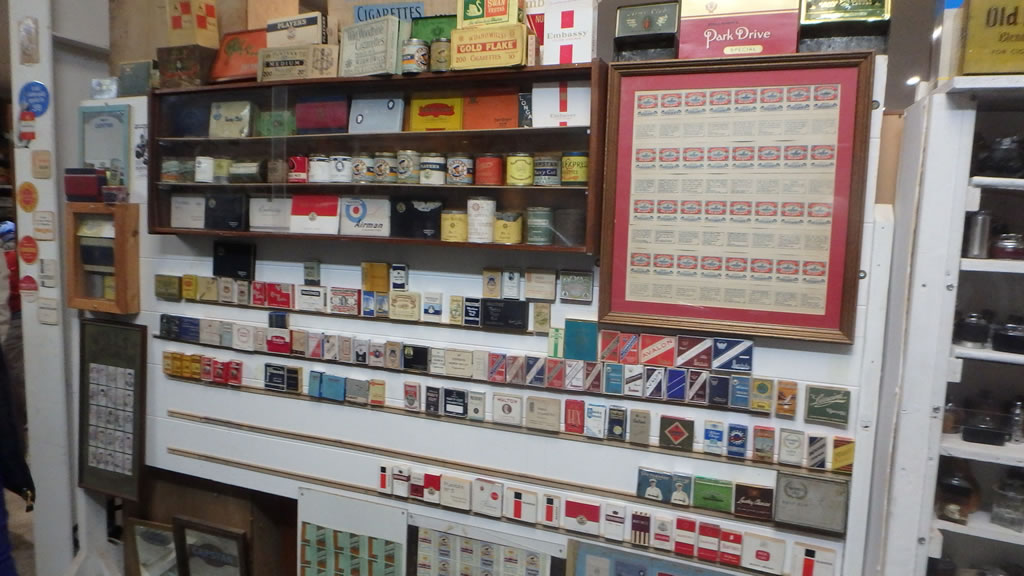
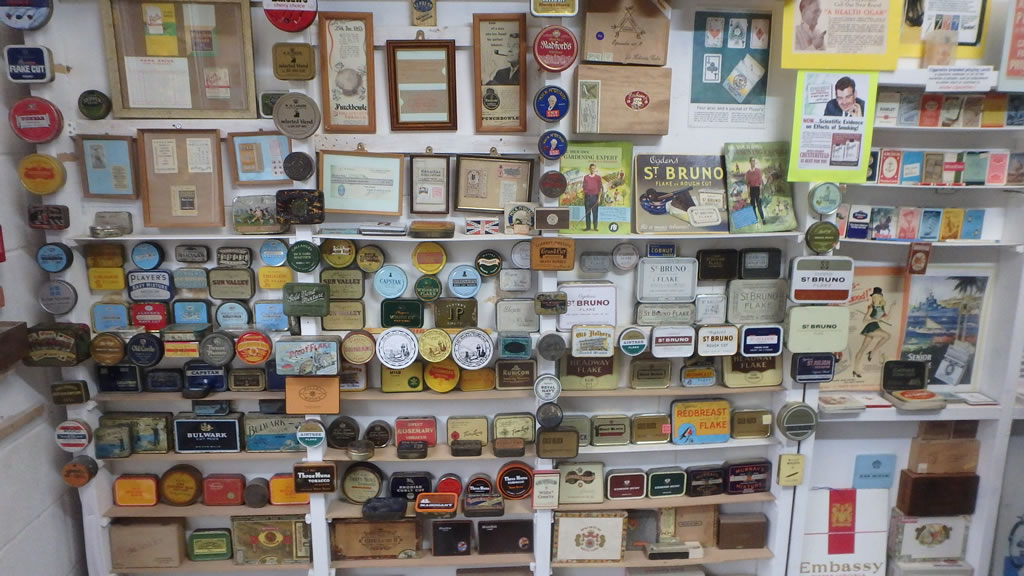
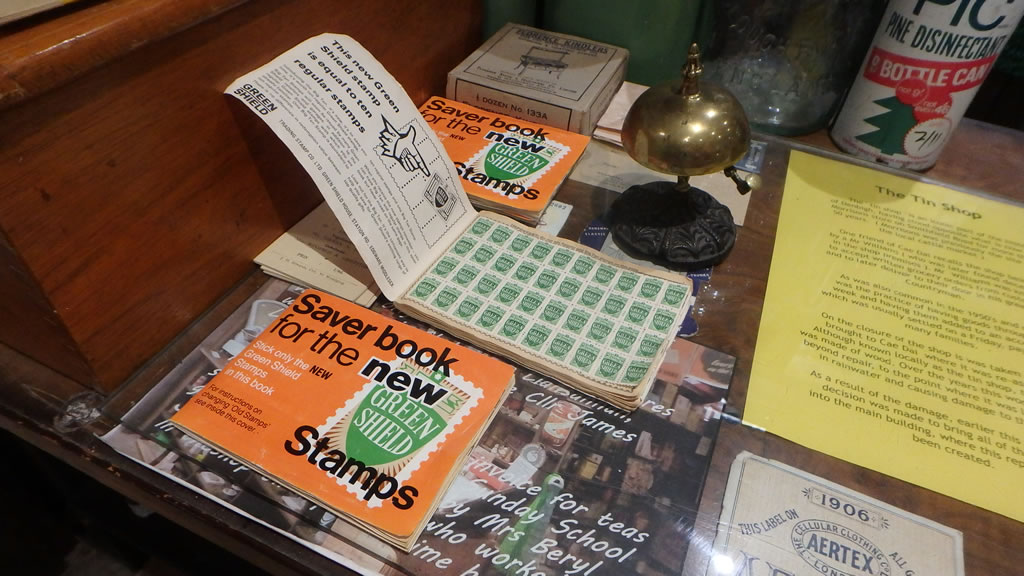
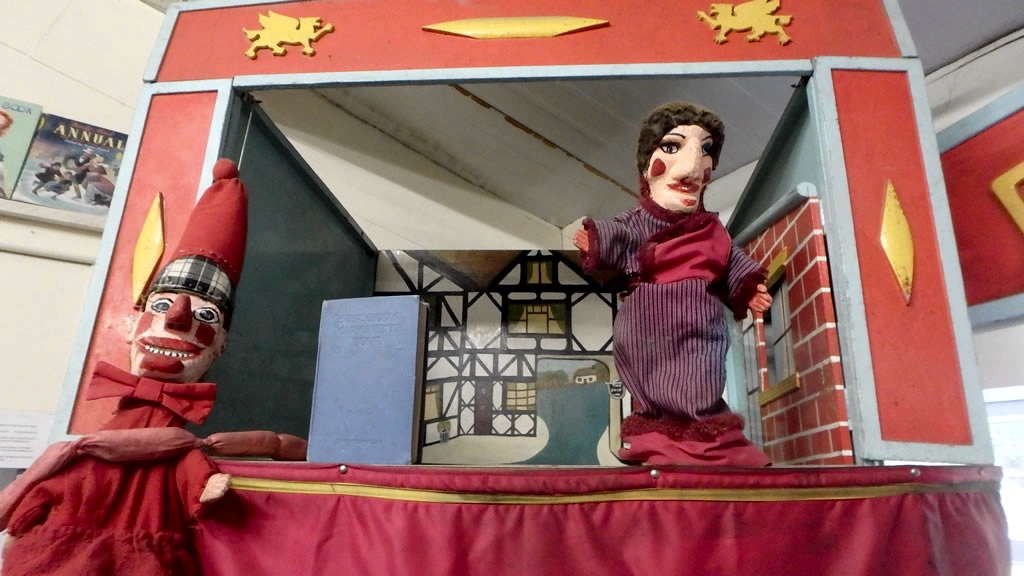
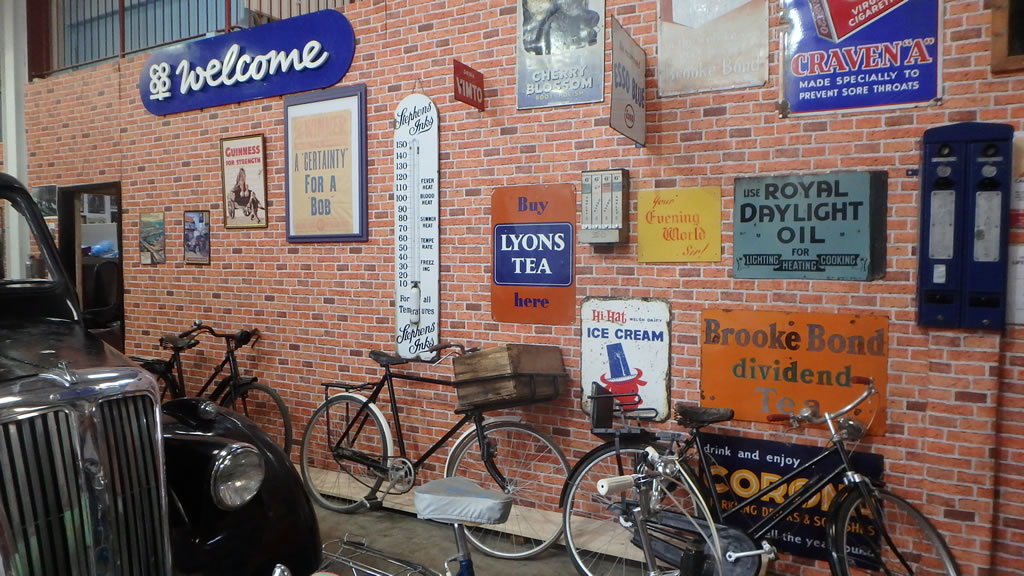
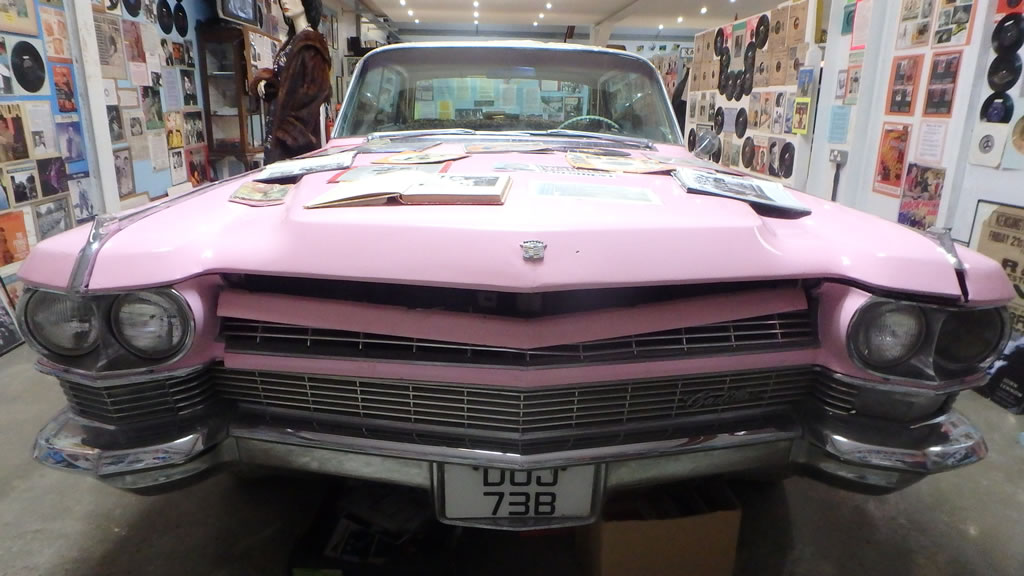
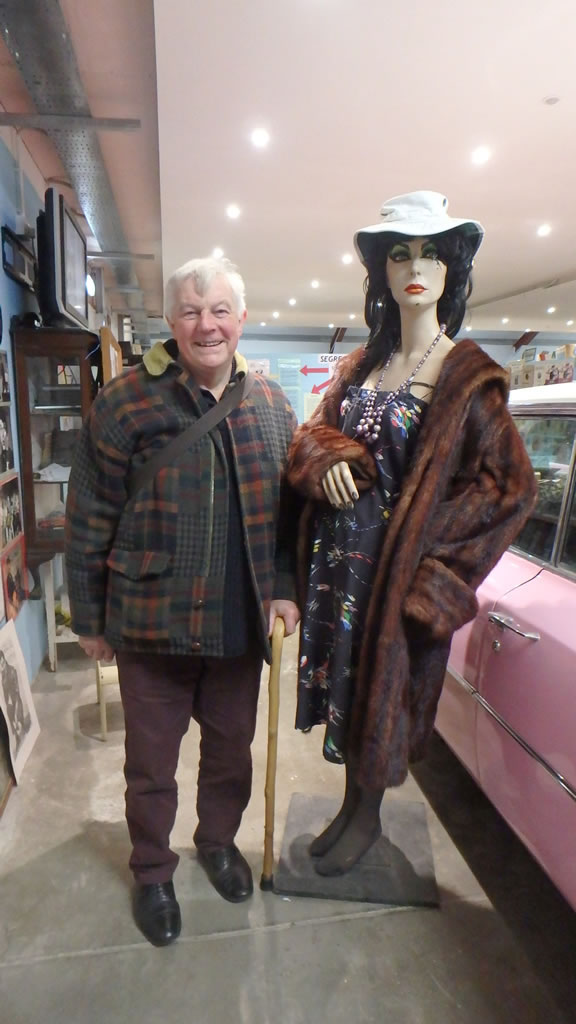
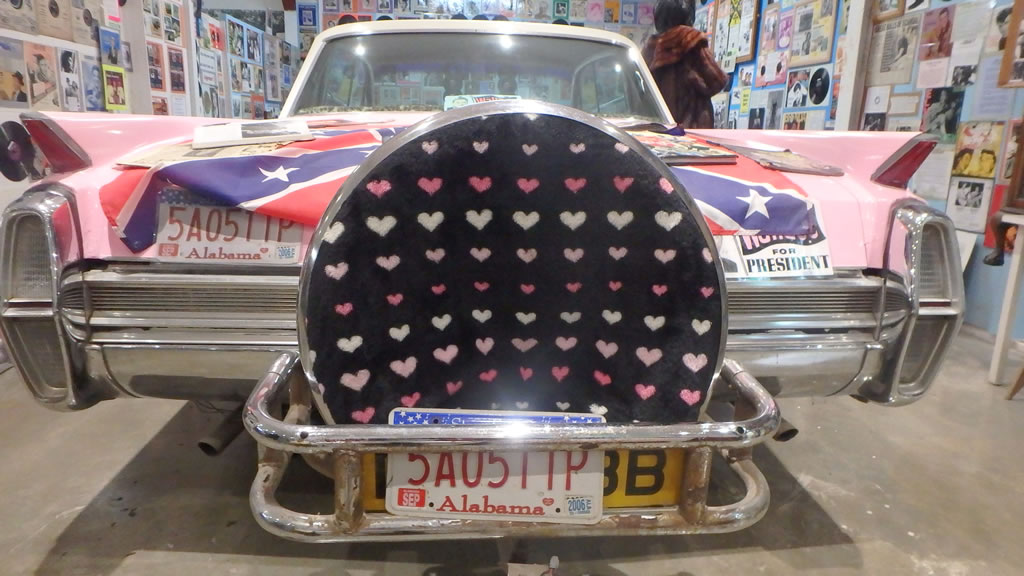
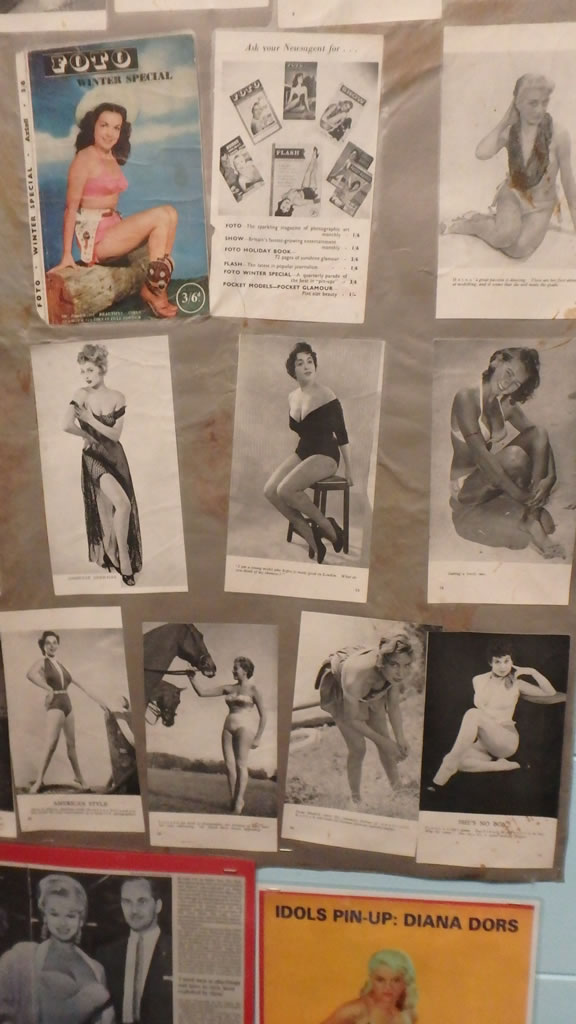
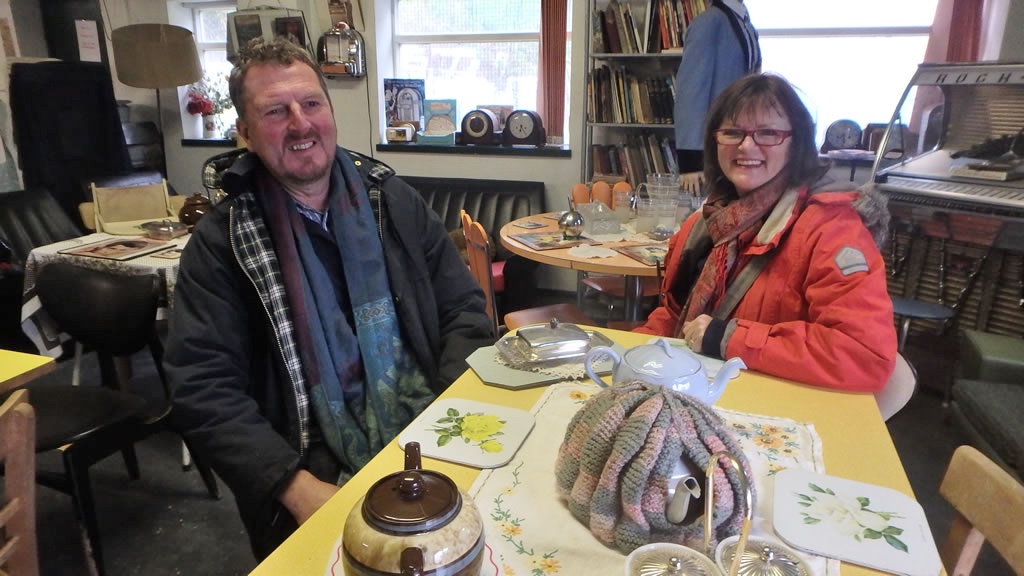
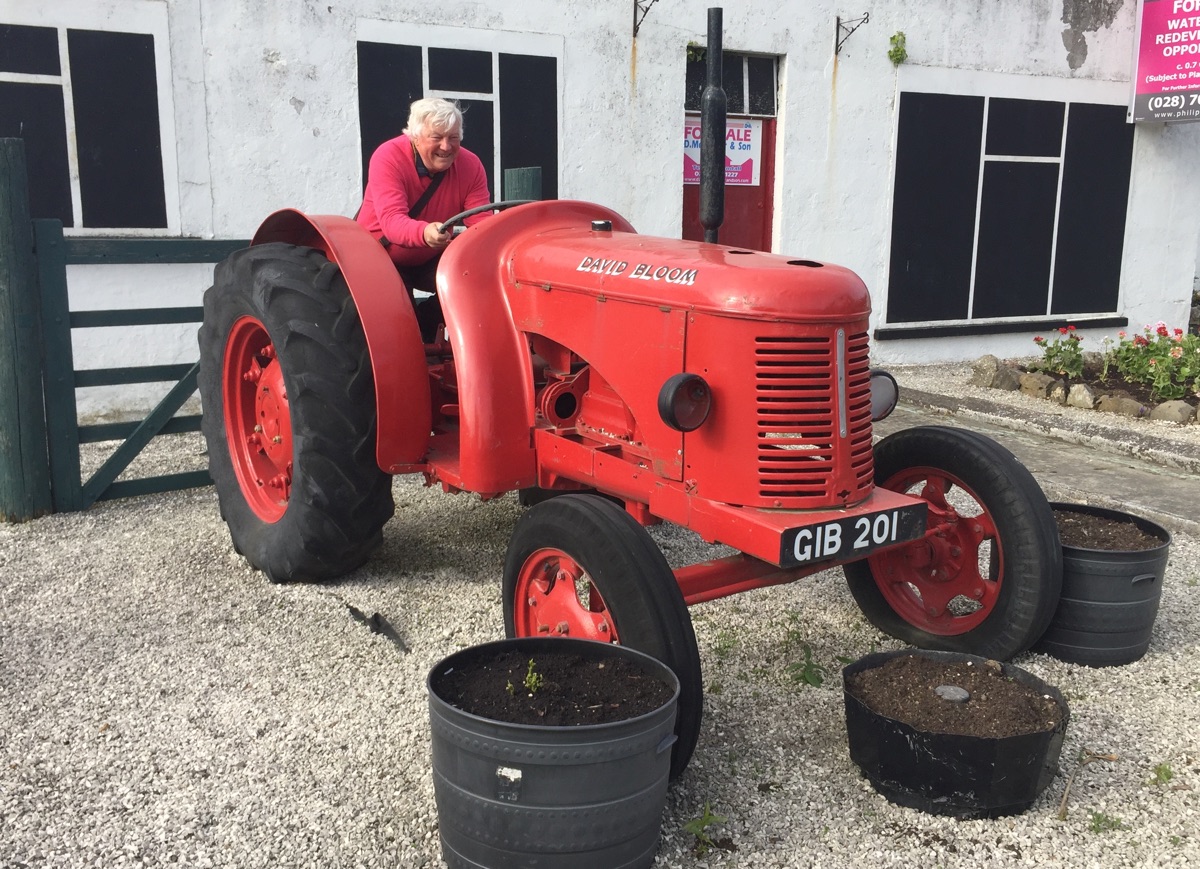
En-route we visited the Cae Dai Trust 50's Museum, located on the B4501 road to Nantglyn, Denbigh. Run by a very affable chap known as 'Sparrow', David Harrison MBE is a Welsh philanthropist and a lovely eccentric. A mechanic by trade but he has led a very colourful life as the lead singer in a band called Sparrow and the Gossamers.
He later got involved in boxing and ran a nightclub for the Kray twins. He was a friend of Bruce Reynolds, the mastermind behind the Great Train Robbery in 1963, which no doubt accounts for the exhibit of the getaway truck used in this infamous robbery. Due to his disability in stammering, he co-founded the British Stammering Association in 1978 with his best friend John Peel.
The museum was remarkable, not only in the quality of all the exhibits but also in the changes which have happened over the last 50 years. Of particular note were the changes in our society to smoking, entertainment, pin-ups and social acceptability. It's really a must-visit museum of life in the '50s.
There was some speculation on the hotel accommodation that had been booked in Aberystwyth. Trip Advisor reviews were quite negative so it was with lots of trepidation that we all went to our bedrooms. I just can't understand where such reviews had come from. Everyone was very pleased with both the accommodation and the food provided. Indeed I would like to put on record it was the best I've ever stayed in on any previous NOA social weekend that I've been on.
Saturday 26 October 2019 The following morning a large contingent of us watched the Rugby World Cup game between England and New Zealand and after the wonderful win we trundled off to the Centre for Alternative Technology (CATS) in the foothills of South Snowdonia, three miles north of Machynlleth.
It was unfortunate that the rain came down and in particular that the cliff railway was said to be broken. Regrettable as our party had several who could not easily climb the steep hill to the centre. The organisers did transport some up by a car, but for me, the whole experience was not the best to benefit from what they had to say or had to show. Perhaps a re-visit on a much better day will prove the technology inspiring.
We returned to the hotel and after a visit to a hostelry or two, returned for evening dinner followed by entertainment provided by a young singer who, while he was only 21 yrs of age, knew many of the songs from our yesteryears.
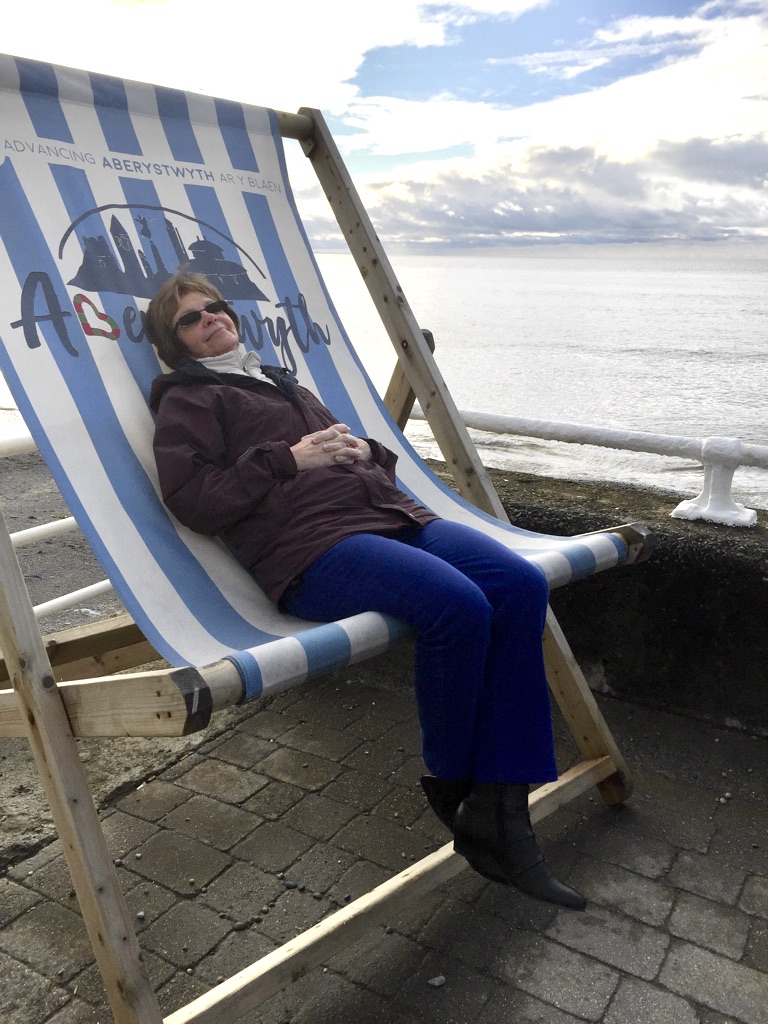
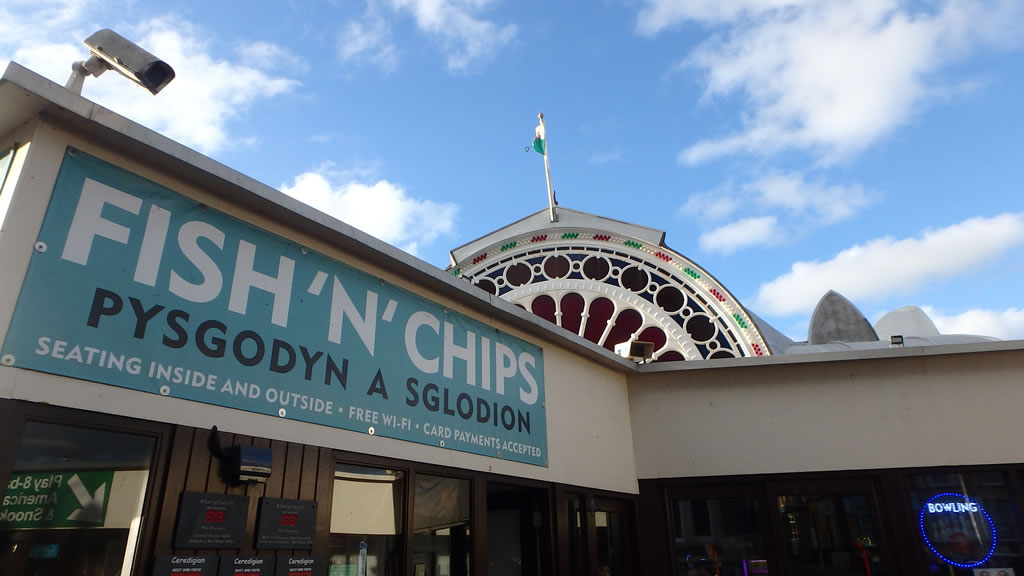
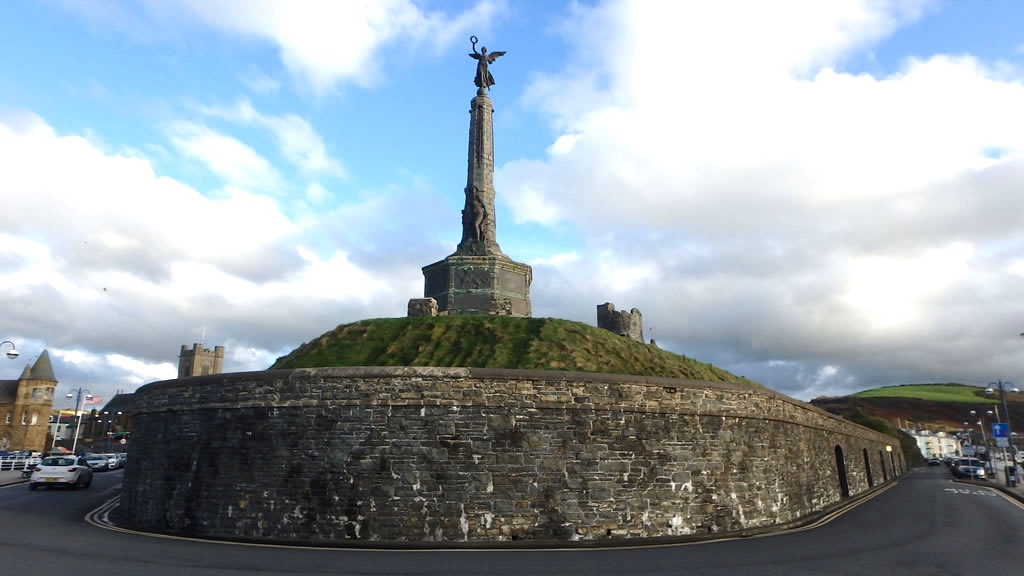
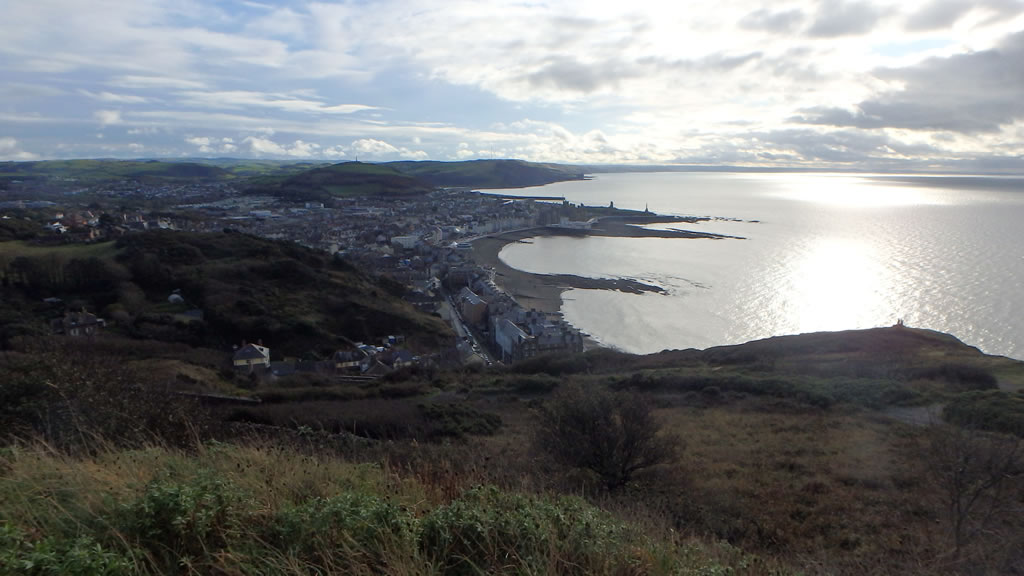
Sunday 27 October 2019 A much brighter day to explore Aberystwyth. Although a thriving seaside town in the summer, the historic town of Aberystwyth is better known as a university town and the centre of learning for Wales, as it is also home to the National Library of Wales and boasts the largest Arts Centre in Wales. The town is huddled between three hills and two beaches.
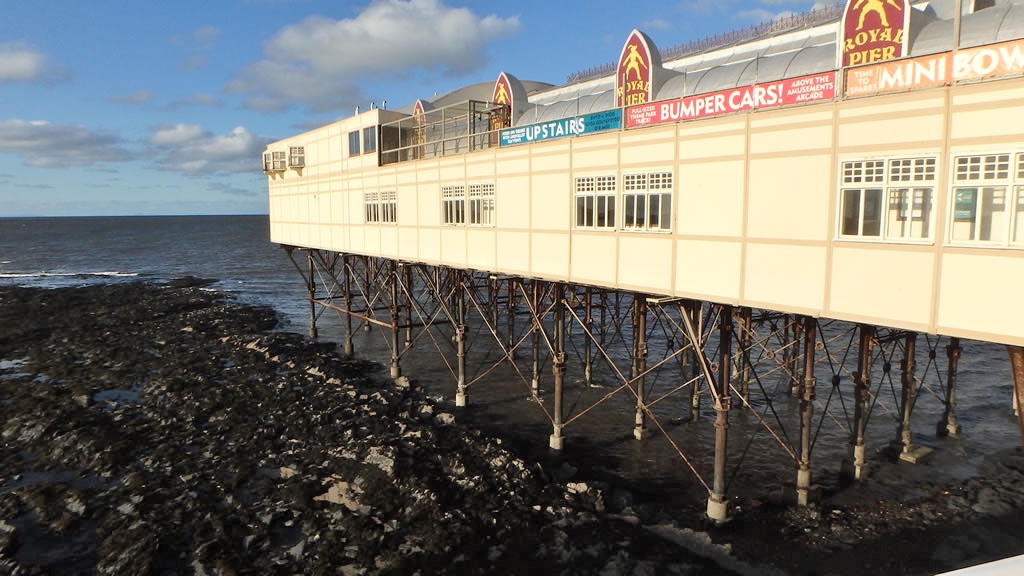
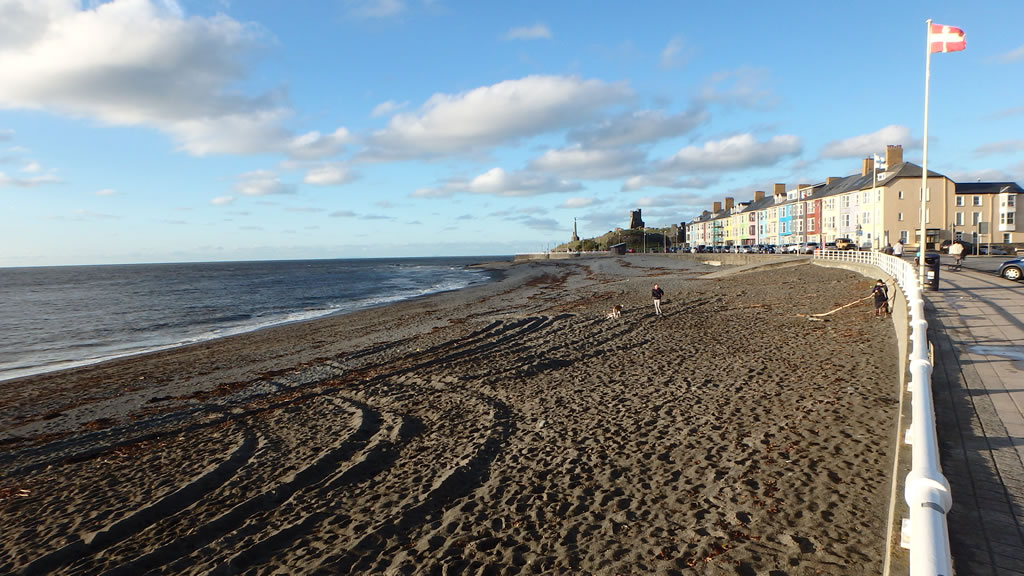
It has a 778 feet long funicular railway (1896), the second-longest in the British Isles and now a Grade II listed structure. The promenade, the pier, shops, beaches and the new and old harbours were all visited.
Then time for lunch before boarding the coach for our journey back. It was great to spot the famous Red Kites soaring in the bright sky along the A44. After a diversion or two due to the flooding of the Welsh rivers and some road closures, we arrived back at the marina just one hour later than planned. An enjoyable trip and a great social, with others asking what are we going to do next spring. Let's wait and see!
Our return to Glasgow almost two weeks later, Wednesday 10 July. Joined by Tanya (to crew on Phyllis) who had travelled from North Wales to meet up at Warrington Bank Quay before we picked up Tom at Preston railway station. We arrived early afternoon at Dumbarton and were met by Douglas, our host at the marina. Both Phyllis and Spray had been well looked after at Sandpoint Marina. Especially considering what the river can do to the boats if they are not looked after.
For those who aren't aware Sandpoint was the place where the Cutty Sark was built. By the time we got ourselves and the boats sorted we joined Douglas for a beer and something to eat in the town.
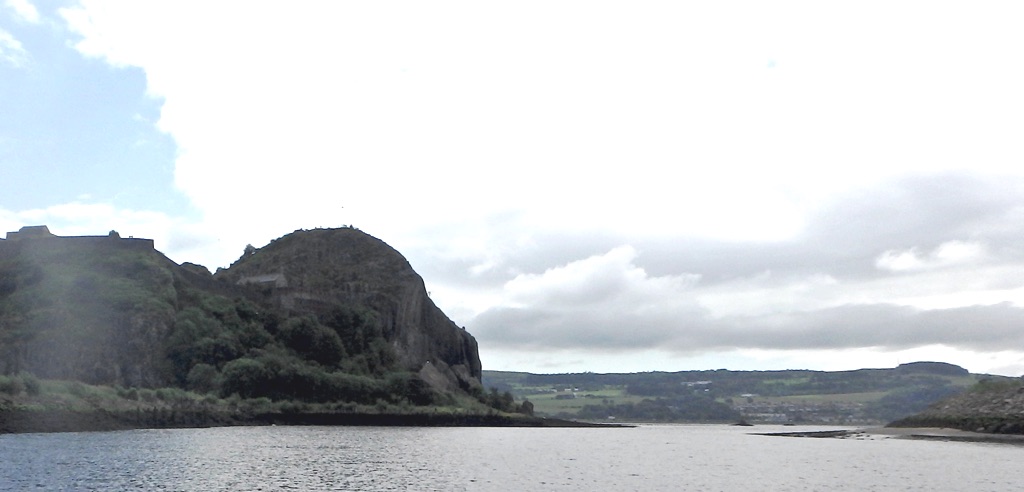
The River Leven. Can you spot four wrecks? There were actually six wrecks in the vicinity.
The following day saw our breakfast at Denny's, the Denny Ship Model Experiment Tank (the last building remaining from the shipbuilding days) which forms part of the Scottish Maritime Museum. After breakfast, a must-visit as this was the first commercial ship model testing tank built in the world and it retains many original features today: a water tank as long as a football pitch, clay moulding beds for casting wax model ship hulls and the original Victorian machinery used for shaping models.
L-R: Tanya, Tom & Douglas with the Titan crane in the background..
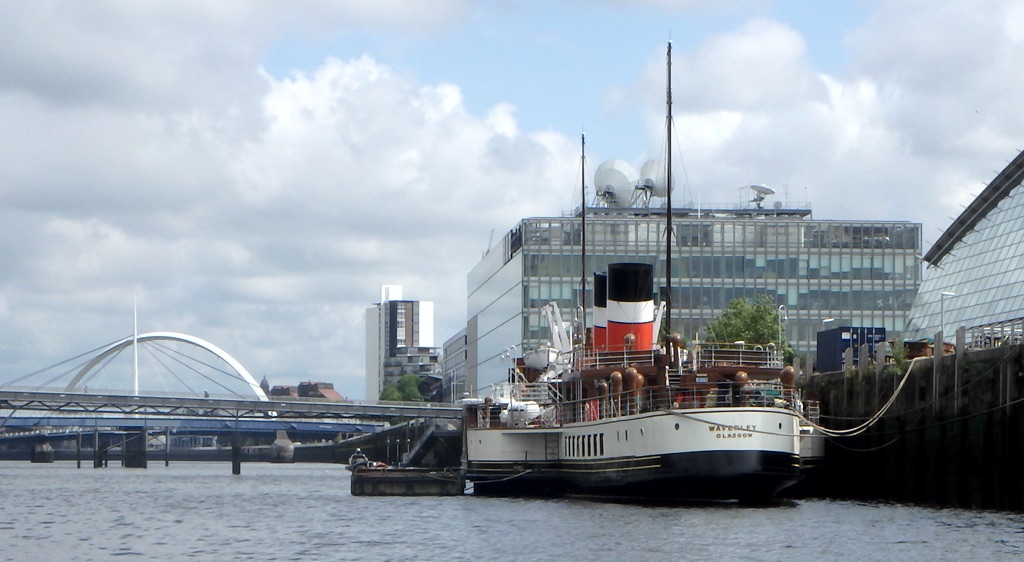
Then off to the supermarket for victualling the boats with the afternoon on Douglas's RIB upriver to see the upper Clyde and Big Bertha (huge crane), the paddle steamer Waverley and the new navy ship builds by BAE.
The Waverley on berth awaiting repair!
A visit too, for Tanya and Tom to the recently opened Glasgow Distillery - No Whiskey there yet! While Douglas and Kevin visited the wonderful River Side museum and went aboard the tall ship 'Glenlee'. That evening we all enjoyed a wonderful meal at the 'Sugarboat', down the line in Helensburgh. Highly recommended.
Friday 12 July and we said our goodbyes to Douglas and headed down the Clyde. In harmony with the music played by Tanya on her Penny Whistle, as she did on every departure whilst on the Clyde. A great sail towards the Isle of Bute with berthing at Port Bannatyne. A short bus ride to Rothesay for a visit to the famous and not to missed, Victorian toilets. And then an evening meal in a local hostelry prior to catching a taxi back to the marina.
The following day we departed, to Tanya's music, to sail through the Kyles of Bute. What a marvellous passage along the fjord passing through the Burnt Islands before sailing south past Tighnabruaich and Kames in the West Kyle. It's here that a sudden wind shift saw Phyllis's jib part from the end of the bowsprit. A swift dropping of the halyard and pulling in of the sail sorted it all out in double-quick fashion.
Then around Ardlamont Point and in a northwesterly direction on Loch Fyne brought us to one of the most astonishing marinas on the Clyde, Portavadie. The complex was originally built for the purpose of constructing concrete oil rigs. After an immediate move to steel platforms, the facility became redundant and after a little time, it was developed to a marina complex, opened in 2010. Five-star luxury apartments, private sauna facilities, a restaurant and conference centre.
Never the less the rock blasting at Portavadie and the resulting very deep water intended for building oil platforms has left an excellent and well-sheltered marina. Well worth a visit, a refuel, an evening meal and breakfast.
Sunday 14 July and we started our homeward bound sail. Exceptionally becalmed conditions saw us motor-sail southwards to Troon. Another well-protected marina and a wonderful seafood meal in a very busy Scott's Restaurant on the marina complex.
Monday and we ventured along the South Ayrshire coastline passing Ayr, Turnberry Golf Course with Alsa Craig always within sight in the far distance. Girvan was our next port of call en route to Port Patrick and then onto Peel (IOM). Well, that was the plan! A meal on board before a restful night and an early start.
Time to depart, engines started and into gear. Phyllis would not budge! Forward and reverse gears were selected, still, no way would she would go! The gearbox was suspected. The harbour master contacted as well as the local ship repairers and marine engineers. Alas, it was the Scottish wake weeks and no one was available to help. Reluctantly Phyllis was left in Girvan and everyone, Tanya, Kevin & Tom started on our way home on Spray.
The plan was now to return to Deganwy as quickly as possible so the next leg saw us landfall in Peel (IOM) in the wee hours and then after some rest and recovery an evening departure directly to Deganwy. Arriving late afternoon on Thursday 18 July. Two and half days after leaving Phyllis in Girvan.
It's another story but Phyllis was eventually repaired after a couple of trips back to Girvan before moving her to Troon for approx six weeks prior to winter berthing Phyllis in the inner Clyde at Largs Marina, where she is now currently berthed until the spring of 2020.
Photos by Tom, Tanya & Kevin [click any image & scroll through the gallery]
The cruise started at the end of the Liverpool River Festival (Tues 4 June 2019) when seven boats attended the event in the Royal Albert Dock, including Jean the Hearts of Oak and Anna Elldi. Some five boats, Comrades, Sara Ann, Phyllis, Spray and Anna Elldi departed the River Mersey on the first leg to Conwy, with Anna Elldi returning to the Menai Straits.
At this point due to the weather and other circumstances, the new departure date was arranged for Tuesday 18 June. Comrades and Sara Ann could not make the revised timescales and remained in Conwy.
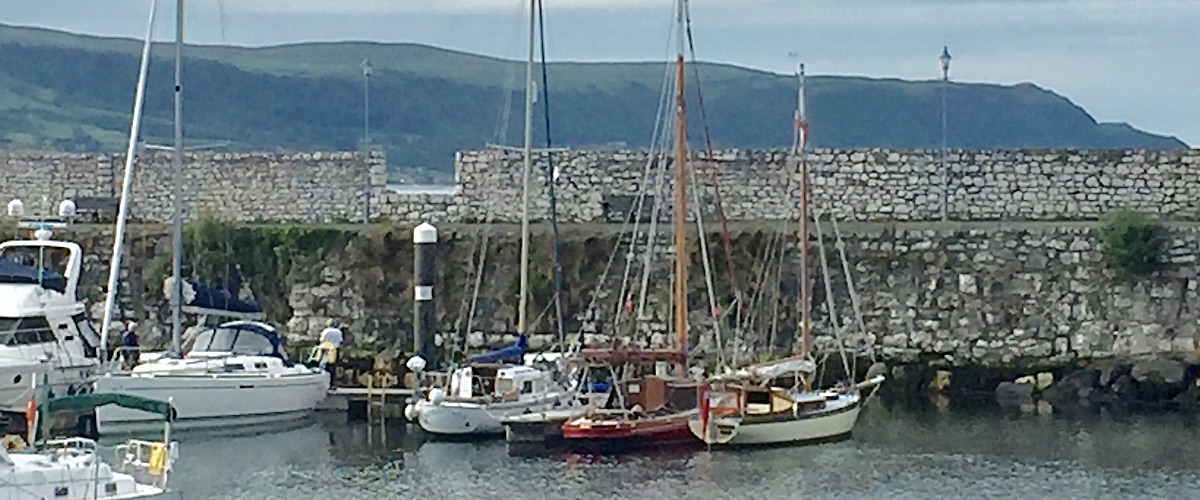
Phyllis (crewed by Kevin) and Spray (crewed by Tom) continued to the IOM, Port St Mary before departing to Peel via Calf Sound. After a couple of days a departure, to Northern Ireland ensued with landfall close to Portavogie before sailing along the coast through Donaghadee Sound to transverse Belfast Loch to Carrickfergus Marina.
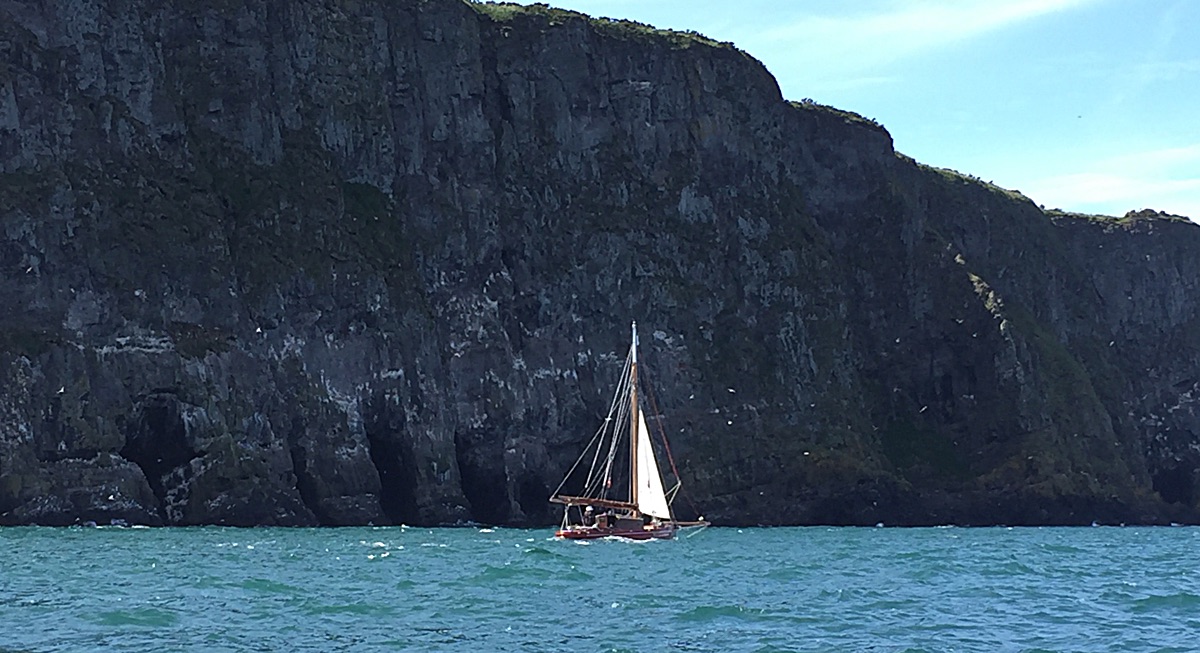
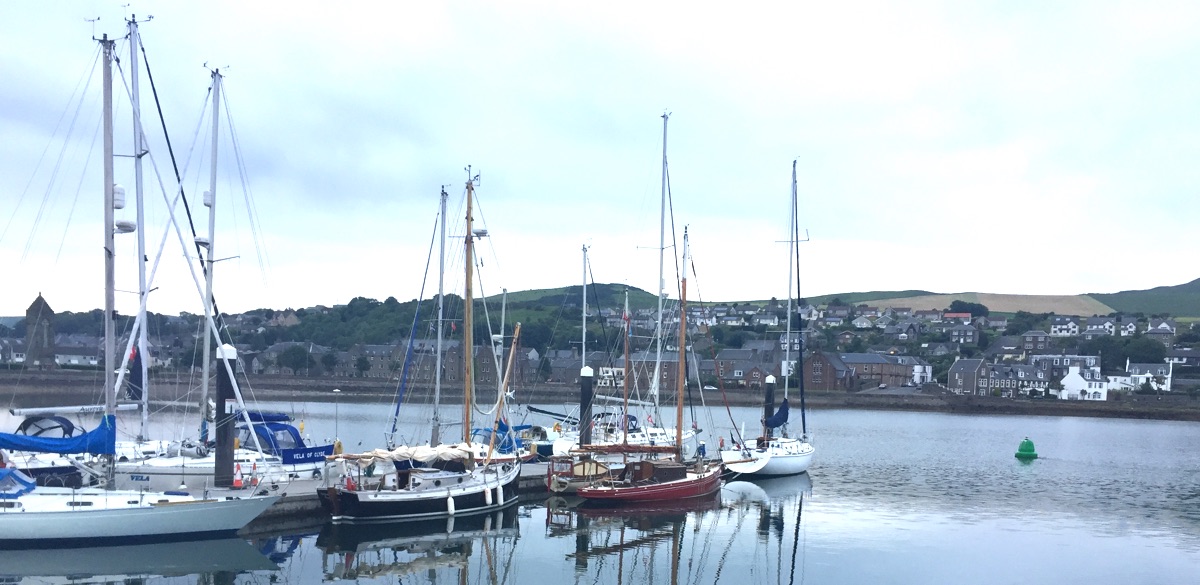
Our next departure took us along the cliffs of the Antrim coast, hosting a multitude of different nesting sea birds before our arrival in Glenarm. With the Mull of Kintyre insight, we then journeyed north to arrive in Campbeltown after passing Sanda Island to port and Alisa Craig well off to starboard. Lots of Gannets were seen en route feeding, before going to their breeding ground on Alisa Craig, famous too for the granite used for making curling stones. Alisa Craig dominates the outer Clyde and can be seen for miles and miles on a clear day.
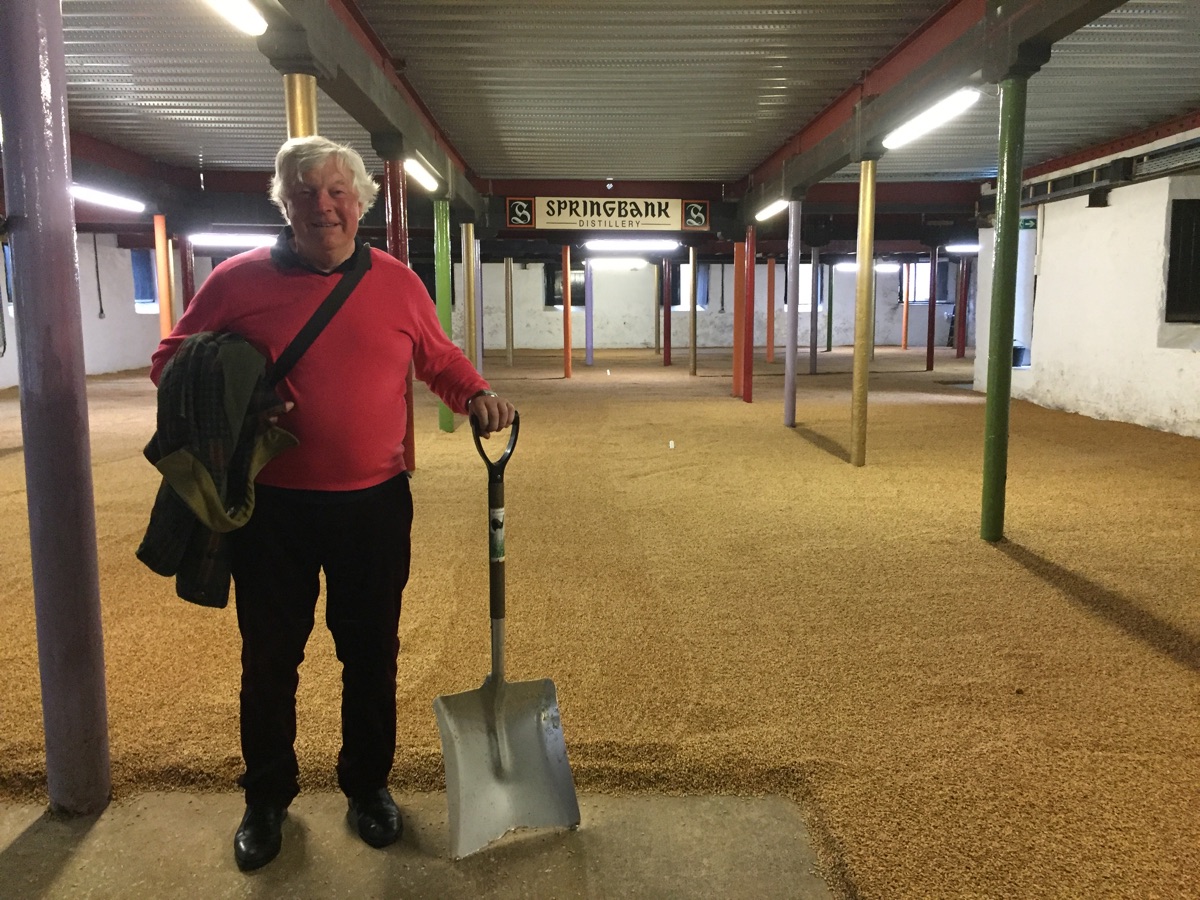
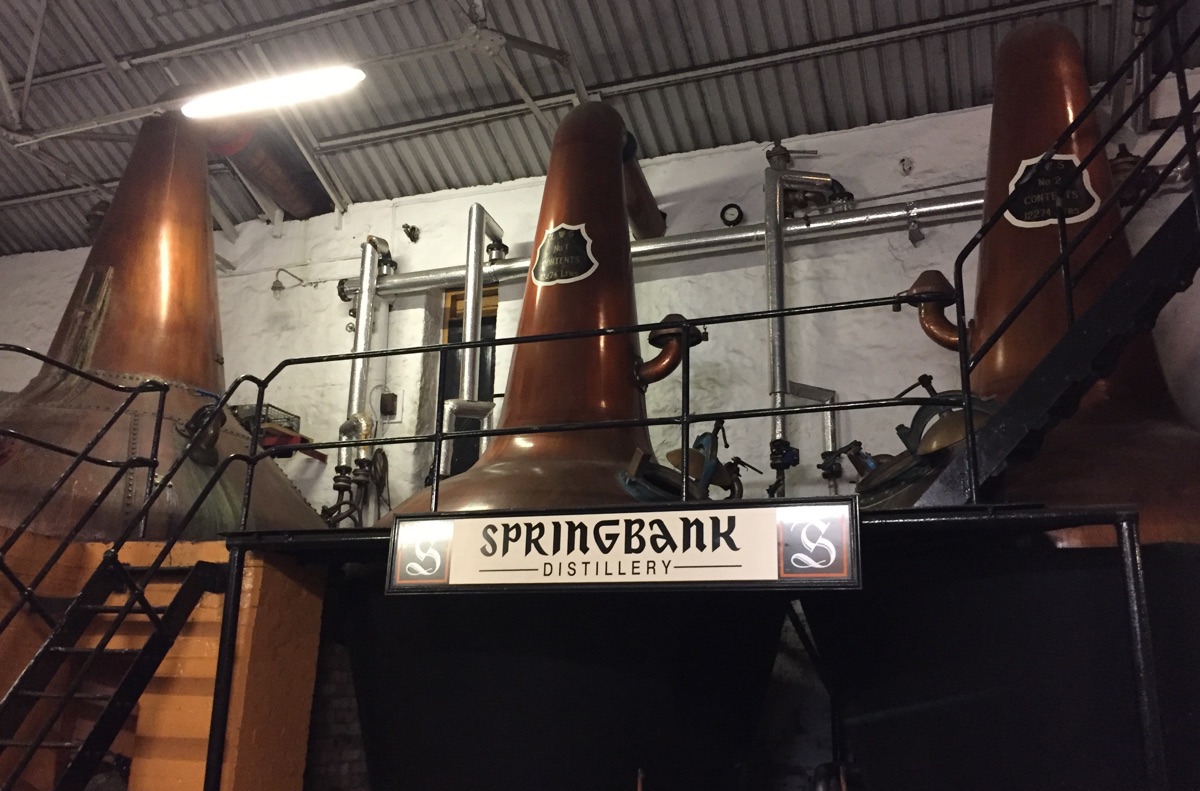
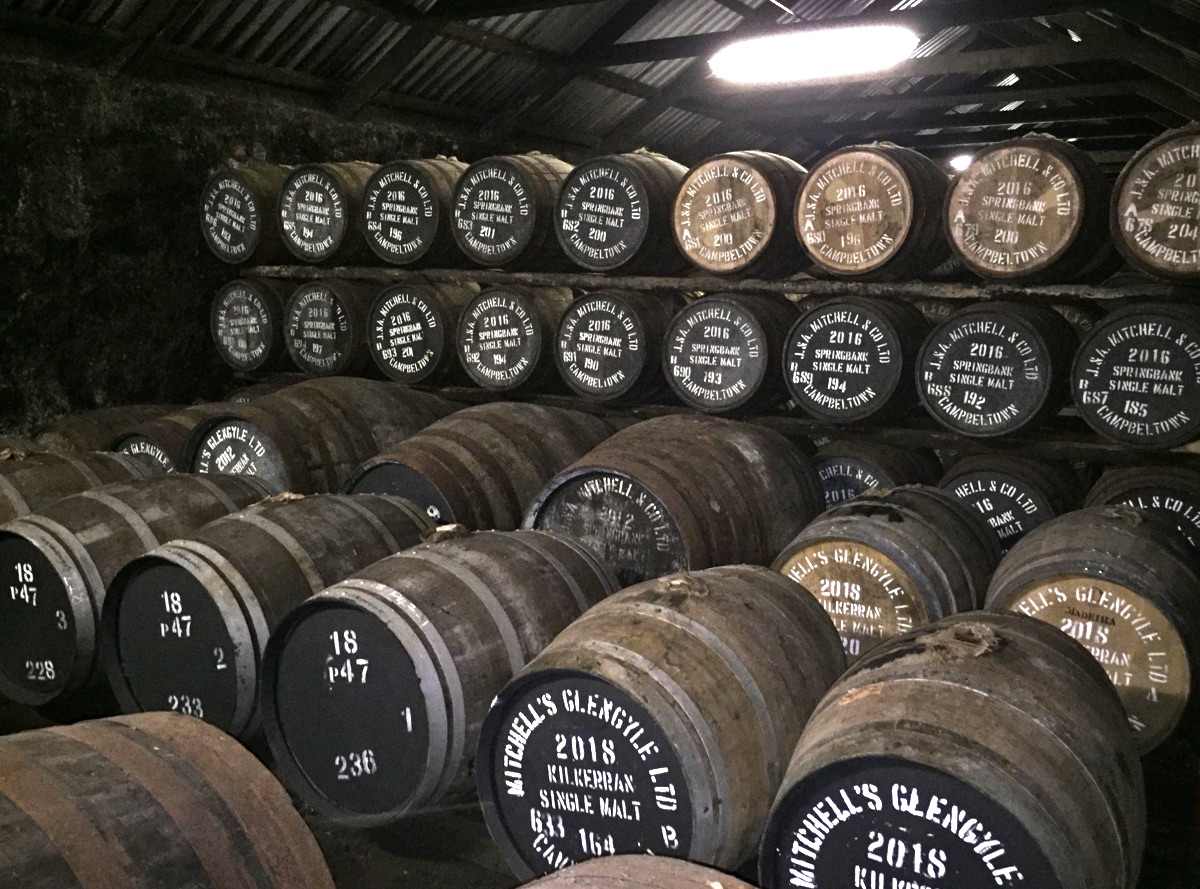
Campbeltown refuelled and refreshed, we enjoyed a visit to the local distillery 'Springbank'. We then crossed Killbrannan Sound towards the Isle of Arran passing Lochranza to starboard before crossing Bute Sound to enter the inner Firth of Clyde towards Largs Marina.
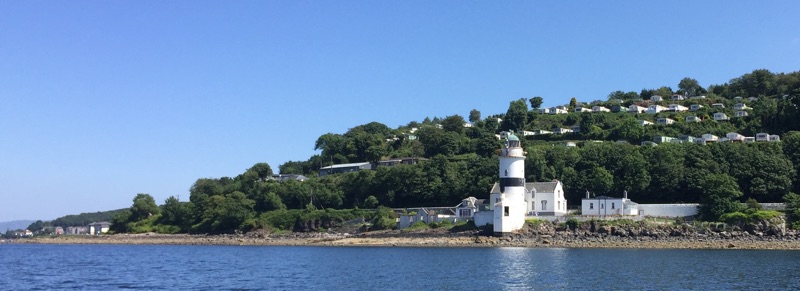
Once again refuelled, both with diesel and a good meal we set-off up the Clyde the following morning, with the incoming tide, passing Inverkip, Cloch Point lighthouse and Greenock. We were met by Douglas to show us the way into Sandpoint Marina (a very little known spot really only known to locals) in his powerful RIB. Just on the cusp of the tide, Phyllis just lightly touched bottom on the soft sand before lifting again to continue down the short channel to Dumbarton the final destination on the first phase. Then treated to a fast RIB ride to get some supper in Holy Loch before catching up with some old friends prior to returning back to Dumbarton. We left the marina the following morning, Thursday 27th June, to catch the train from Glasgow back to home.

 When it got light in the morning I could see that the headsail appeared to be split and either side of the shrouds. As I was coming up to Hook Head I decided to go down the river and look for an anchorage or mooring to sort out the sail and engine. I started the engine and motored up to near Dunmore East and picked up a mooring. The engine stopped but re-started. I had something to eat and fell asleep for 4 hours.